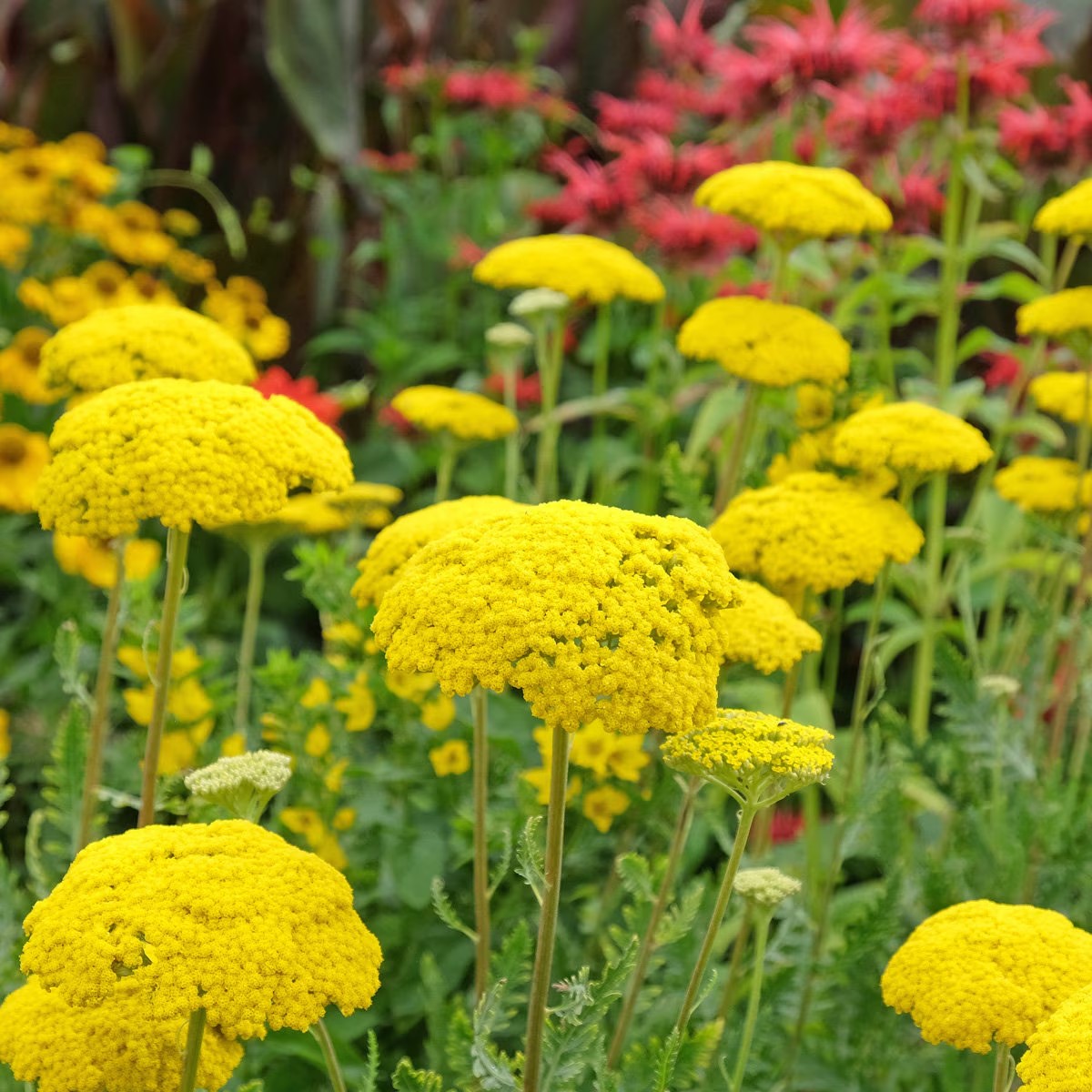
Yarrow Parker's Variety
Flat-topped flower clusters that lacewings and parasitic wasps consider essential. Medicinal perennial that returns year after year. The insectary's deepest anchor.
Parker's Variety is a selection of Achillea millefolium known for its strong, upright stems and large, dense flat-topped flower clusters — the architecture that makes yarrow so effective as an insectary plant. The flat-top flower structure provides a landing platform for parasitic wasps, lacewings, and predatory beetles that are less able to access the dome-shaped or trumpet-shaped flowers preferred by bees.
As a perennial, yarrow returns each season and spreads gradually, becoming a permanent insectary presence in the garden over time. The feathery aromatic foliage also contributes to the scent layer that disrupts pest navigation. The medicinal tradition of yarrow stretches back thousands of years across multiple cultures.
Yarrow is unique in the insectary system for its specific attraction of predatory and parasitic insects — not just pollinators. The flat flower architecture allows insects with short mouthparts and weak flight that cannot access other flower types to land and feed. These insects — parasitic wasps, lacewings, predatory beetles — are the primary natural control for garden pest populations.
Plant once and maintain indefinitely. Yarrow is drought-tolerant, heat-tolerant, and requires minimal intervention. Deadhead spent flower clusters to encourage continued bloom. In containers, the spreading habit is naturally constrained — no need to manage aggressive spread. Divide every 2–3 years to maintain vigor.
Why This Plant Is Here
Yarrow Parker's Variety has a specific role in this year's garden: flavor, beauty, pollinator support, story, or seasonal production.